
Introduction
Many creators and marketers rely on LinkedIn’s built-in scheduler to plan content in advance. Scheduling posts helps maintain consistency and makes it easier to manage social media publishing.
But a common question is starting to appear among creators:
Do scheduled LinkedIn posts get less reach than posts published immediately?
While working on SocialMe AI, I started noticing a small but interesting pattern in LinkedIn post analytics.
Posts scheduled directly inside LinkedIn appeared to perform differently compared to posts published immediately or posts scheduled through external tools.
After observing this behavior across multiple posts, I decided to investigate the pattern more closely.
Testing LinkedIn’s Built-In Scheduler
Recently, I scheduled five posts using LinkedIn’s native scheduling feature.
The schedule looked like this:
- Post 1 → Scheduled 15 minutes later
- Post 2 → Scheduled next day
- Post 3 → Scheduled two days later
- Post 4 → Scheduled three days later
- Post 5 → Scheduled four days later
The goal was simple: maintain a consistent publishing rhythm.
But the performance results were not consistent.
LinkedIn Post Scheduled 15 Minutes Later: Higher Reach
The first post, scheduled just 15 minutes later, performed well.
It reached a healthy portion of my network and received strong engagement.
Below is the analytics screenshot from that post.
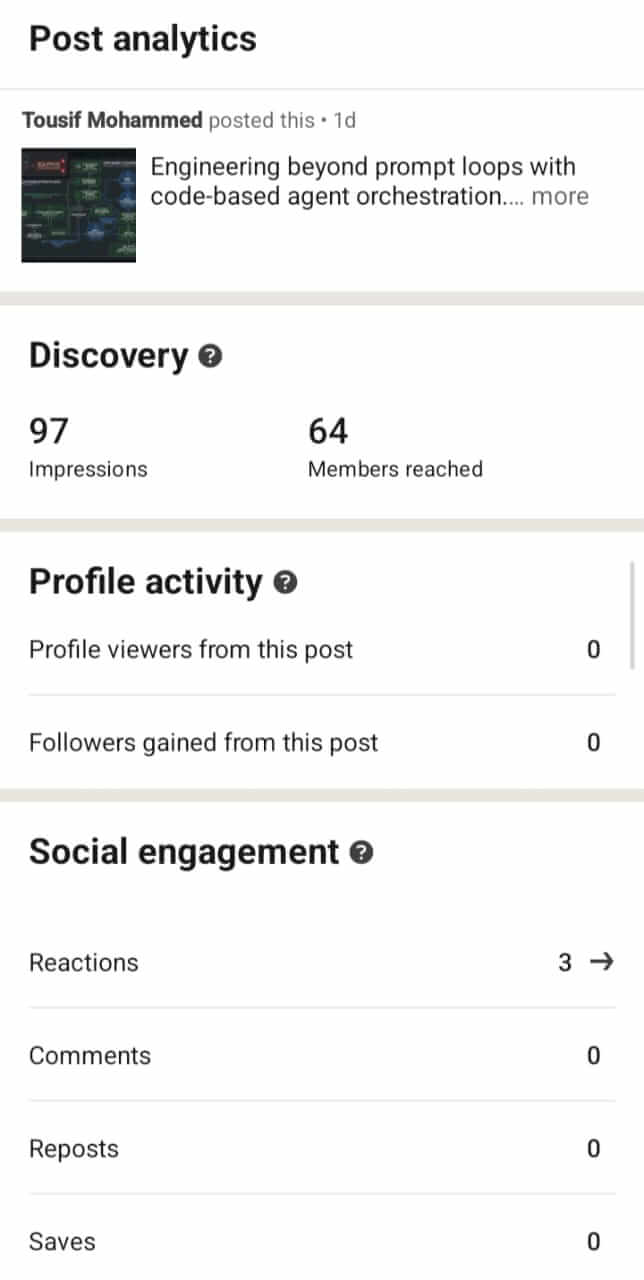
LinkedIn analytics showing strong reach and engagement for a post scheduled shortly after publishing time.
LinkedIn Post Scheduled One Day Later: Lower Reach
However, the post scheduled one day later showed noticeably different performance.
Despite similar content quality and audience, the reach and engagement were significantly lower.
Here is the analytics screenshot from that post.
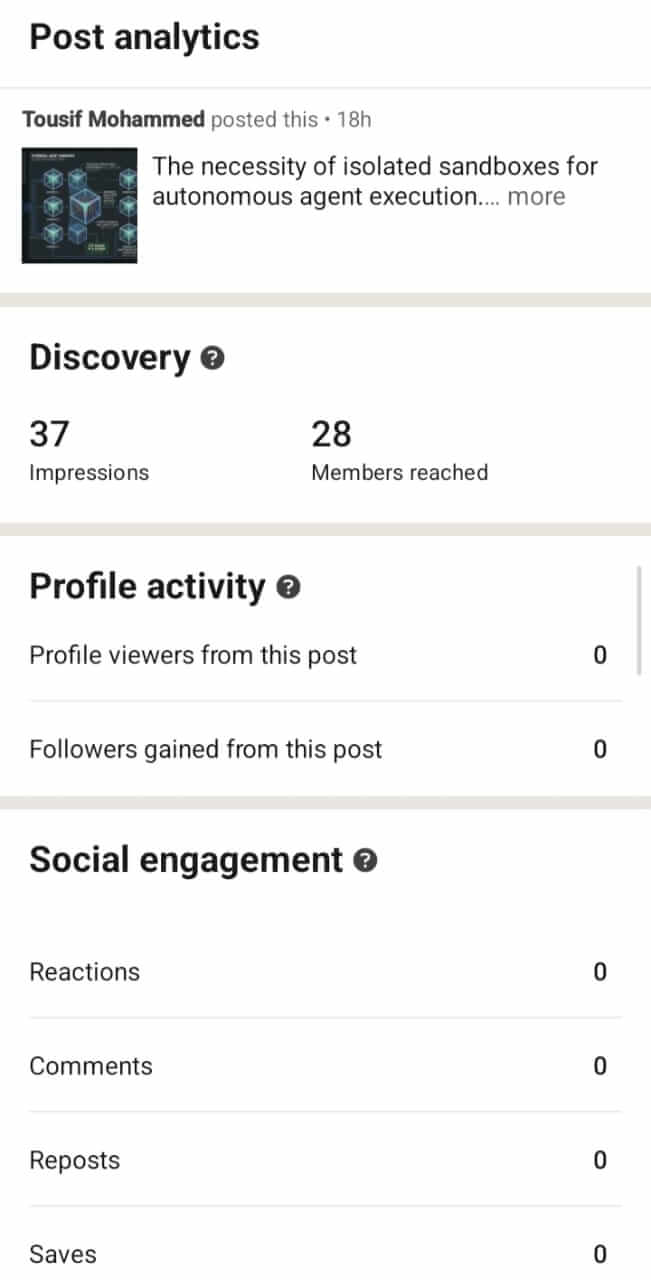
LinkedIn analytics showing reduced reach and engagement for a post scheduled a day in advance.
This pattern was not isolated. I have seen similar outcomes across multiple posts over time.
Immediate Posts Perform More Consistently
Alongside these scheduled posts, I frequently publish build-in-public updates about the development of SocialMe AI.
These posts are not scheduled.
They are written and published immediately.
Interestingly, these posts consistently perform better than posts scheduled several days in advance through LinkedIn’s built-in scheduler.
They typically reach more people and generate stronger early engagement.
Scheduling LinkedIn Posts Using Third-Party Tools
While observing this behavior on my personal LinkedIn posts, I was also managing social media accounts for several businesses using SocialMe AI.
For these accounts:
- Posts were scheduled through SocialMe AI
- Content was automatically published at the scheduled time
- No paid promotions were used
Despite being scheduled, these posts often produced strong organic results.
Below is an example from a business account managed through SocialMe AI.
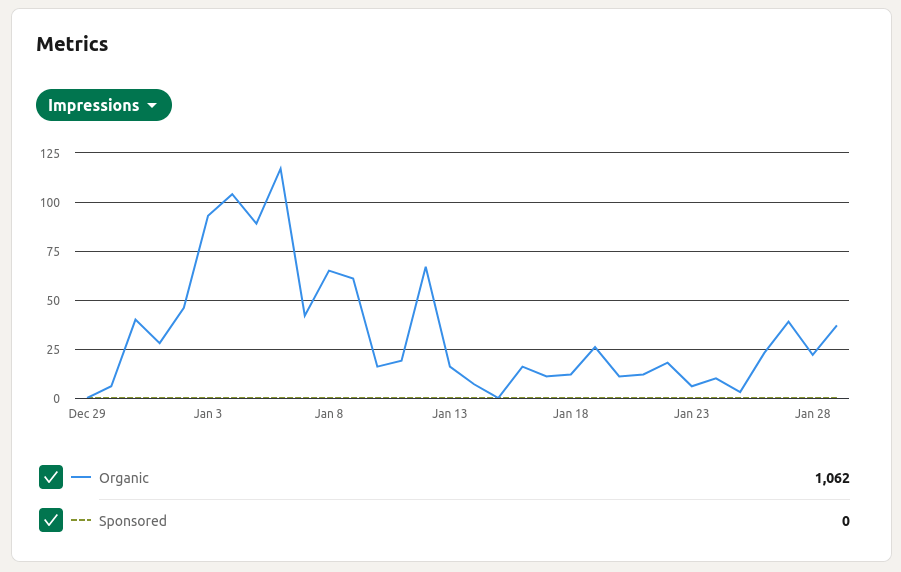
Organic reach and follower growth from a business scheduling posts through SocialMe AI.
Many of these accounts experienced:
- Growth in organic reach
- Increased follower counts
- Consistent engagement improvements
This raised an interesting question.
Why would posts scheduled inside LinkedIn behave differently from posts scheduled through an external tool?
Why LinkedIn Scheduled Posts May Get Lower Reach
This is not officially confirmed by LinkedIn, but one possible explanation could be related to how post timestamps are stored internally.
When scheduling directly inside LinkedIn, the system may store the time the post was scheduled as the original creation timestamp.
For example:
If a post is scheduled today to be published four days later, LinkedIn may internally record the creation time as today, even though the post becomes visible later.
If LinkedIn’s algorithm considers content freshness when distributing posts, the system might treat the post as older content once it goes live.
External scheduling tools work differently.
Platforms like SocialMe AI publish posts exactly at the scheduled time, which makes the post appear as if it was created and published in real time.
This could explain why externally scheduled posts sometimes perform similarly to live posts.
Why This Matters for Businesses and Creators
For creators and businesses relying on organic reach, these small platform behaviors can have a meaningful impact.
If the observation holds true, scheduling posts days in advance directly inside LinkedIn may reduce the initial distribution of those posts.
Meanwhile, scheduling through tools that publish content at the exact posting time may preserve the algorithmic advantage of fresh content.
For marketers managing multiple accounts, this difference can influence:
- Reach
- Engagement velocity
- Audience growth
Have You Observed This Too?
This article reflects repeated observations across multiple posts and accounts.
However, social media algorithms are complex and constantly evolving.
Have you noticed differences between:
- Posts scheduled inside LinkedIn
- Posts published immediately
- Posts scheduled through external tools
If you have observed similar behavior, I would be very interested to hear your experience.
Key Takeaways
From these observations, a few insights emerge:
- LinkedIn posts scheduled shortly before publishing appear to perform normally.
- Posts scheduled several days in advance may experience reduced reach.
- Posts published immediately often receive stronger early engagement.
- Third-party scheduling tools that publish posts in real time may behave differently from LinkedIn’s native scheduler.
These observations highlight how small platform mechanics can influence social media performance.
Final Thoughts
Organic reach on social media is rarely random.
Often, the difference between a post reaching hundreds of people versus thousands lies in subtle platform mechanics.
Scheduling should help creators stay consistent without sacrificing reach.
That belief is one of the motivations behind building SocialMe AI — a platform designed to help businesses automate social media while still maximizing organic growth.
Frequently Asked Questions About LinkedIn Scheduled Posts
Do scheduled LinkedIn posts get less reach?
Some creators have observed that posts scheduled days in advance using LinkedIn’s built-in scheduler may receive lower reach compared to posts published immediately. However, LinkedIn has not officially confirmed this behavior.
Does LinkedIn treat scheduled posts differently?
It is possible that LinkedIn internally stores the post creation timestamp when a post is scheduled. If the algorithm prioritizes content freshness, posts scheduled several days in advance may appear less fresh when they go live.
Are third-party scheduling tools better for LinkedIn?
Some marketers report that scheduling tools that publish posts at the exact scheduled time behave more like real-time posts. Tools like SocialMe AI automate publishing while maintaining the appearance of a live post.
Should you avoid scheduling LinkedIn posts?
Scheduling can still be useful for maintaining consistency. However, creators may want to test whether scheduling posts very far in advance affects their reach.